World
Saudi Business Confidence Soars to 56.7 Points as Non-Oil Growth Accelerates
Saudi Arabia's business confidence index climbed to 56.7 points in September 2026, propelled by surging manufacturing orders and expanding services.
10 septembre 2026

Crown Prince Mohammed bin Salman leads the Saudi Cabinet in condemning persistent Houthi aggression, establishing a stern security posture for Red Sea shipping lanes.
The Saudi Cabinet, chaired by Crown Prince Mohammed bin Salman on September 8, 2026, officially condemned the Houthi militia's escalated military aggression and maritime sabotage, signaling a hardened defense doctrine designed to safeguard critical Bab-el-Mandeb shipping lanes, preserve domestic economic security, and rally international alliances against destabilizing proxy warfare in the Middle East.
The cabinet's decisive declaration comes after months of escalating maritime skirmishes and drone interventions near vital transit corridors. For Riyadh, the persistent threat posed by the Houthi movement is no longer merely a localized border conflict; it has evolved into a strategic disruption of international commerce. Over 12 percent of global seaborne trade passes through the narrow straits of Bab-el-Mandeb and into the Red Sea. Unchecked missile and drone deployments targeting commercial vessels directly threaten global energy transportation and supply chain stability.
During the executive meeting in Riyadh, the Saudi leadership highlighted that ongoing criminal conduct by non-state actors undermines ongoing diplomatic initiatives aimed at achieving long-term regional peace. Crown Prince Mohammed bin Salman reaffirmed that while the kingdom remains committed to political dialogue where feasible, sovereign integrity and the safety of maritime trade routes remain non-negotiable national security pillars.
Military analysts in the Gulf point out that the Houthi arsenal—consisting of anti-ship ballistic missiles, loitering munitions, and uncrewed surface vessels—continues to pose a asymmetric challenge to high-value merchant vessels. Despite repeated warnings from coalition partners and international maritime security task forces, unlawful intercepts and targeted strikes against commercial shipping have persisted, forcing international logistics firms to reroute vessels around the Cape of Good Hope at immense financial cost.
The timing of the Saudi government’s statement underscores deep concerns over the economic fallout of sustained regional volatility. Under the ambitious Vision 2030 framework, Saudi Arabia is investing hundreds of billions of dollars into turning its western coast into a world-class hub for tourism, trade, and logistics.
Flagship gigaprojects such as NEOM, the Red Sea Global luxury developments, and expanded port infrastructure at King Abdullah Port and Jeddah Islamic Port rely heavily on guaranteed maritime security in the Red Sea corridor. Persistent security threats along the southern maritime flank jeopardize foreign direct investment, elevate international shipping insurance rates, and complicate efforts to establish Saudi Arabia as the premier logistics bridge between Asia, Europe, and Africa.
By issuing a formal cabinet decree rejecting Houthi aggression, Riyadh sends a unambiguous signal to foreign investors and global trade partners: Saudi Arabia will deploy all necessary political, economic, and defensive measures to secure its borders and economic assets against regional disruption. The kingdom's leadership reiterated that national economic diversification cannot proceed under the constant shadow of regional proxy warfare.
Riyadh's aggressive stance against Houthi maneuvers also marks a diplomatic pivot toward demanding stronger international accountability. The Saudi administration has repeatedly called upon the United Nations Security Council to strictly enforce arms embargoes designed to interdict illegal weapons transfers into Yemen. Coalition intelligence reports continue to document the flow of sophisticated missile components and guidance systems into Houthi-controlled territory, in direct violation of international maritime law.
In its official address, the Saudi Cabinet urged the international community to move beyond passive diplomatic expressions of concern and implement concrete, punitive measures against entities that jeopardize freedom of navigation. Riyadh maintains that political concessions cannot be granted to armed groups that continuously weaponize international shipping channels for political leverage.
The defense posture of the Gulf Cooperation Council (GCC) has similarly shifted toward unified maritime surveillance and integrated air defense networks. Neighboring Gulf states have bolstered intelligence sharing and coordinated naval patrols alongside international naval coalitions to deter further hostiles in the Arabian Sea and Gulf of Aden.
Saudi Arabia’s broader foreign policy maintains a balance between hard military deterrence and strategic diplomacy. While Riyadh spearheaded peace talks in previous years to establish a stable cease-fire in Yemen, the cabinet's recent announcement indicates that patience with unilateral provocations has run out. Peaceful engagement, according to the official cabinet position, requires a credible commitment to peace from all participating factions.
As regional trade dynamics face mounting cost pressures due to elevated insurance premiums and extended transit times, the Saudi Cabinet’s zero-tolerance policy against Houthi aggression outlines the clear conditions required for long-term regional engagement. The kingdom's commitment to defending its sovereignty and ensuring uninterrupted commercial traffic through the Red Sea remains central to its security matrix, establishing an firm redline for regional stability.
The Saudi Cabinet, chaired by Crown Prince Mohammed bin Salman, formally rejected and condemned the Houthi militia's continued military aggression and maritime targeting in the region. The kingdom reaffirmed a zero-tolerance policy against attacks that threaten Red Sea commerce and national security.
Maritime unrest directly impacts major western Saudi megaprojects like NEOM and Jeddah port developments by increasing commercial shipping insurance rates and logistical risks. Ensuring total security along the Bab-el-Mandeb corridor is essential for attracting foreign direct investment and transforming the country into a global trade hub.
Saudi Arabia is demanding strict enforcement of United Nations Security Council arms embargoes to stop the illegal smuggling of advanced weaponry into Yemen. The cabinet urged the international community to move beyond diplomatic statements and implement concrete measures against entities destabilizing international shipping lanes.
GuruAlpha News Desk
The GuruAlpha News team delivers accurate, timely coverage of breaking news, markets, technology, and lifestyle — in English and Urdu.
Saudi Arabia's business confidence index climbed to 56.7 points in September 2026, propelled by surging manufacturing orders and expanding services.
10 septembre 2026
Electoral gains by nationalist parties across Europe threaten to paralyze EU sanctions against Moscow and dismantle military aid packages for Kyiv.
10 septembre 2026
Hiroshima survivor Isao Harimoto, whose 3,085 career hits remain Nippon Professional Baseball's unbroken gold standard, has died at age 86.
10 septembre 2026
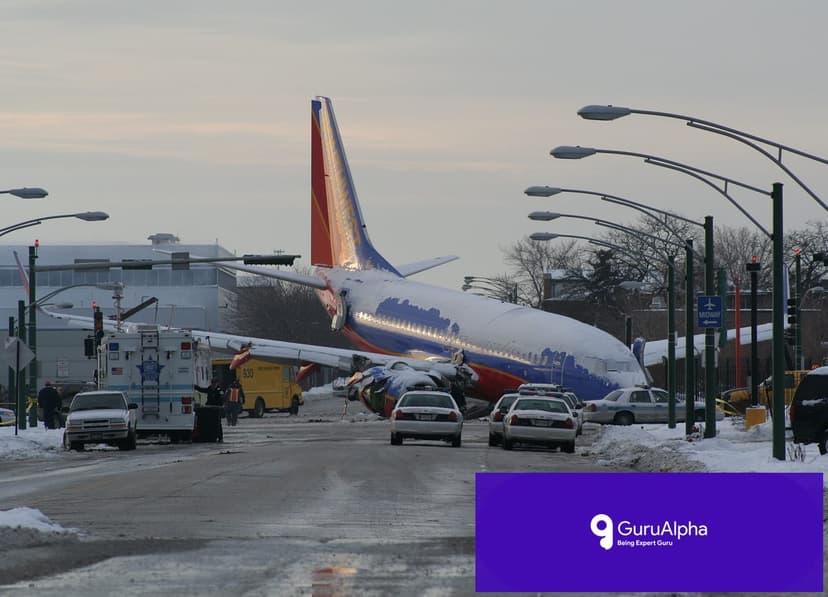
Cockpit recordings reveal a pilot issued repeated speed warnings for nearly two minutes before an Amazon cargo plane overshot a Miami runway.
10 septembre 2026
OpenAI has added Paul Christiano, a pioneer of human feedback alignment, to its governing board as existential risk debates intensify across Silicon Valley.
10 septembre 2026
Volvo brings back the discontinued XC40 plug-in hybrid with Google Gemini AI integration and refreshed design as global electric vehicle momentum shifts.
10 septembre 2026
Apple's decision to omit cameras from its latest AirPods lineup spares consumers from an intrusive surveillance hardware shift.
10 septembre 2026
Automattic's board forced CEO Matt Mullenweg into an involuntary leave of absence, escalating years of governance friction and open-source warfare.
10 septembre 2026