World
Trump's Poll Watchers: Lawsuits Challenge Federal Officers at Voting Sites
Lawsuits accuse the Trump administration of voter intimidation by suggesting federal officers could monitor polling sites.
18 septembre 2026

South Korean President Lee Jae Myung publicly rejected US demands to send troops to the Middle East, citing energy security and regional defense priorities.
South Korean President Lee Jae Myung has officially rejected demands from US President Donald Trump to deploy military forces to the Strait of Hormuz amidst escalating American conflict with Iran. Speaking at a Seoul press conference on September 18, 2026, Lee declared that South Korea will not send troops or naval assets to participate in any Middle Eastern war.
The announcement delivers a direct public refusal to the White House, cutting through months of intense diplomatic friction between Washington and Seoul. Donald Trump's administration had increased pressure on East Asian allies to contribute military assets to a naval coalition operating in the Persian Gulf and the Strait of Hormuz. However, President Lee Jae Myung drew an unyielding line, removing any ambiguity surrounding South Korea's military posture in the Middle East.
"There won't be deployment that would involve or enter war. I can tell you that very clearly," Lee told reporters gathered in Seoul on Friday. "We won't deploy military assets in any form to that end." His statements effectively shut down speculation that South Korea's Cheonghae Unit—a naval anti-piracy task force deployed in the Gulf of Aden—might be re-flagged or repurposed for offensive security duties near Iranian territorial waters.
For Washington, Seoul's refusal marks a rift in its efforts to assemble a broad international coalition against Tehran. For South Korea, the posture represents a calculated defense of its national sovereignty and economic lifeline.
Seoul's calculation relies on cold economic reality and immediate territorial defense. South Korea relies heavily on foreign energy imports, sourcing nearly 70 percent of its crude oil and significant portions of its liquefied natural gas from the Middle East. Over 60 percent of those energy supplies transit directly through the narrow bottleneck of the Strait of Hormuz. Participating in military strikes or naval blockades against Iran would invite immediate Iranian reprisal against South Korean tankers or severe disruptions to energy supply chains upon which South Korea's heavy industries depend.
At the same time, South Korean defense planners remain focused on the immediate threat across the 38th parallel. North Korea's nuclear arsenal and missile testing program require constant operational readiness from the Republic of Korea Armed Forces. Diverting high-tier naval destroyers or specialized infantry to the Persian Gulf directly undermines deterrence operations on the Korean Peninsula. By refusing to join a distant foreign confrontation, Lee Jae Myung prioritizes territorial defense and raw economic stability over Washington's unilateral expeditionary goals.
Historically, South Korea has acceded to security requests from Washington during major foreign conflicts. Seoul sent over 300,000 troops to support American forces during the Vietnam War and contributed the third-largest foreign troop contingent during the 2003 invasion of Iraq. However, the political environment in Seoul has shifted dramatically under Lee Jae Myung's leadership. The current administration favors a foreign policy anchored in strategic autonomy rather than automatic compliance with foreign military interventions.
The White House has frequently pressed Seoul to pay higher cost-sharing contributions for the 28,500 US troops stationed in South Korea under the mutual defense treaty. By demanding military contributions in the Persian Gulf, Washington tested the limits of Seoul's allegiance. Lee's clear refusal signals that the bilateral security alliance exists strictly to maintain deterrence against Pyongyang and uphold stability in East Asia, not to serve as an open-ended troop reserve for American conflicts across the globe.
South Korean shipping giants and industrial conglomerates welcomed the president's decision with quiet relief. The Hyundai Merchant Marine fleet and major energy importers like SK Innovation operate dozens of vessels through Middle Eastern sea lanes each month. Had Seoul agreed to Washington's deployment request, Iranian forces could have targeted South Korean commercial vessels in retaliation, mirroring past incidents where Tehran seized foreign oil tankers during heightened tensions.
By keeping its armed forces out of the conflict, South Korea preserves its diplomatic channels with Tehran while protecting its commercial shipping network. The decision sends a clear message across the Indo-Pacific: traditional security allies will no longer automatically sacrifice their own vital economic interests or regional stability to support foreign military operations in the Middle East.
President Lee Jae Myung rejected the request to safeguard South Korea's energy supply, as over 70 percent of its crude oil imports pass through the Middle East. Additionally, Seoul prioritized its immediate territorial defense against North Korea over entering a distant conflict.
South Korea operates the Cheonghae Unit for anti-piracy missions in the Gulf of Aden. President Lee confirmed that this force will not be repurposed or deployed to participate in offensive military actions against Iran.
The decision underscores South Korea's stance that its mutual defense treaty with Washington applies strictly to Korean Peninsula security and regional stability. It marks a shift from past foreign interventions where Seoul automatically contributed troops to US military campaigns.
GuruAlpha News Desk
The GuruAlpha News team delivers accurate, timely coverage of breaking news, markets, technology, and lifestyle — in English and Urdu.
Lawsuits accuse the Trump administration of voter intimidation by suggesting federal officers could monitor polling sites.
18 septembre 2026
The Bank of Japan raised its benchmark interest rate to 1.25% to curb persistent inflation driven by global conflicts and energy prices.
18 septembre 2026
Los Angeles prosecutors charged a drug-impaired driver with murder after her SUV blew a red light and crushed a city bus, killing two.
18 septembre 2026
Nirmeen Noufl’s 12-month extended sentence for dismembering her abusive husband exposes Australia’s complex self-defense laws.
18 septembre 2026
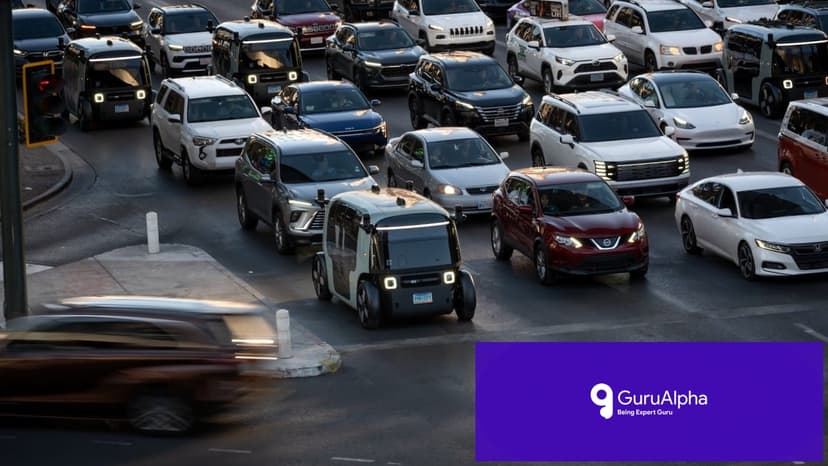
Amazon's Zoox is set to expand its robotaxi fleet beyond 100 vehicles in Nevada, marking a significant shift in autonomous transportation.
18 septembre 2026
USD/PKR at 277.1600. Complete forex analysis with remittance rates for overseas Pakistanis.
18 septembre 2026
Brent at $103.60, WTI at $100.96. Energy market analysis with impact on Pakistan's economy and fuel prices.
18 septembre 2026
Bitcoin at $77,409.00, Ethereum at $2,477.27. Complete crypto market analysis with technical outlook and investment insights.
18 septembre 2026